Forgiveness vs. Reconciliation
Christ forgave everyone; why can’t I?
One of the hardest things to do, whether it’s in a prayer session or in life, is to forgive. This is because we look at forgiveness through our lens, not in God’s.
Here’s an example. Let’s say that you do something to me and I forgive you. Forgiveness does not mean that you were right, and I was wrong. It does not mean that you and I will be best friends from now on. Nor does it mean that I have persuaded you towards my way of thinking and I will “feel” better. In fact, these conditions more closely describe reconciliation than forgiveness and the two are distinctly separate. This is why we can have forgiveness AND reconciliation, forgiveness and NO reconciliation, but we can’t have reconciliation without forgiveness.
Forgiveness is a decision, not a feeling. Jesus forgave everyone but I seriously doubt he felt better after doing so because He was nailed to a cross. It’s also important to note that forgiveness involves 2 people – you and God. Not you and the other person who offended you. Why not the other person? Because you have no control over how the other person reacts, thinks or feels. For example, the person may be rich, powerful, dead, distant, or any other reason that prevents you from influencing them. So, if you have no control over them, why carry around the unforgiveness? It’s been said that doing so is like you drinking poison while hoping the other person will die. It never works and all it does is hurt you. Even Jesus on the cross did not say “I forgive you because you know not what you are doing”, He went to His Abba and said “Father, forgive them for they know not what they do”.
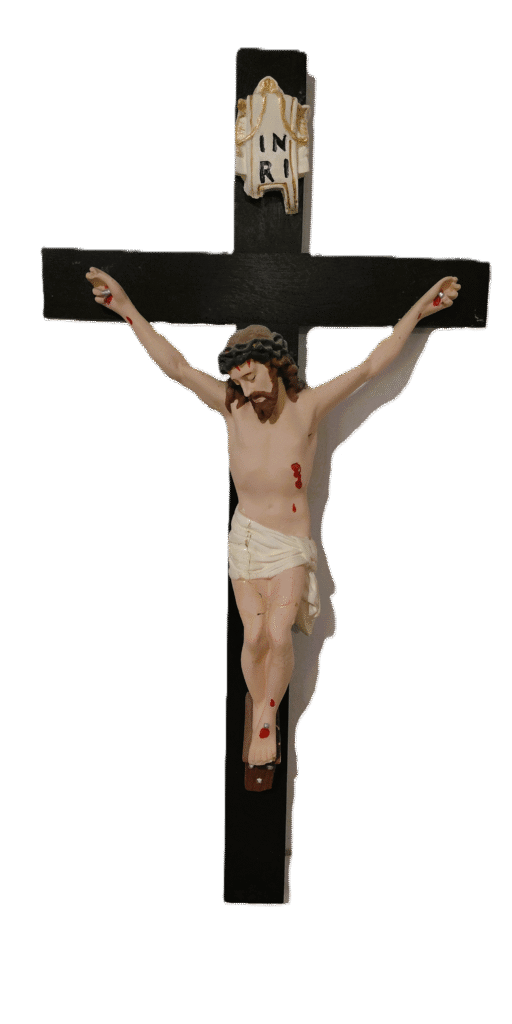
In the Lord’s prayer we ask the Father to “forgive us our trespasses, as we forgive those who trespass against us”. The implications here are clear. Many times, I’ve heard people say things like “John, I could never forgive my sister for what she did to me”. Then after explaining what forgiveness is and in Jesus’ name, they profess forgiveness, they are amazed that two days, two weeks or two months later they there is reconciliation, and they write to me and say things like “I can’t believe it. We’ve not spoken for fifteen years, and my sister called me yesterday and we reconciled!” Well, of course! This is because you finally let go of it and let God take it from you so that He could fix it. We don’t hold on to unforgiveness with our hands, we hold on to it with our free will, and this is why God can’t touch it, because God will not override our free will. I coined the term “the stiff arm” for situations like this. Just as in American football the person with the ball can block others with a stiff arm, we do the same with God. And even Jesus could not overcome the stiff arm. Recall in Mark Chapter 6. Jesus went home to spread the gospel and how was He met? By people who said things like “wait a minute, this is the carpenter’s son. We know who He is and who His family is” and the Bible says that because of this, Jesus could do no mighty works in his hometown and that He was “amazed at their unbelief”.
I’m always amazed at how many people report feeling lighter, freer or relieved after simply professing forgiveness of someone to the Father. It doesn’t immediately make the hurt, or the memories go away, but it’s the first step along that path and usually the hardest person to forgive is that person who looks at you in the mirror every morning. So, what say you? How much unforgiveness are you carrying around? And for how long have you carried it? Isn’t it time to let it go? How can we work in the Lord’s vineyard if our hands are already full of something else? So, stop what you are doing, take account of who you need to forgive and, say “in the name of Jesus Christ I forgive [whoever] for [whatever].
Forgiveness is good for us and for our souls, and that’s not magical, it’s mystical.